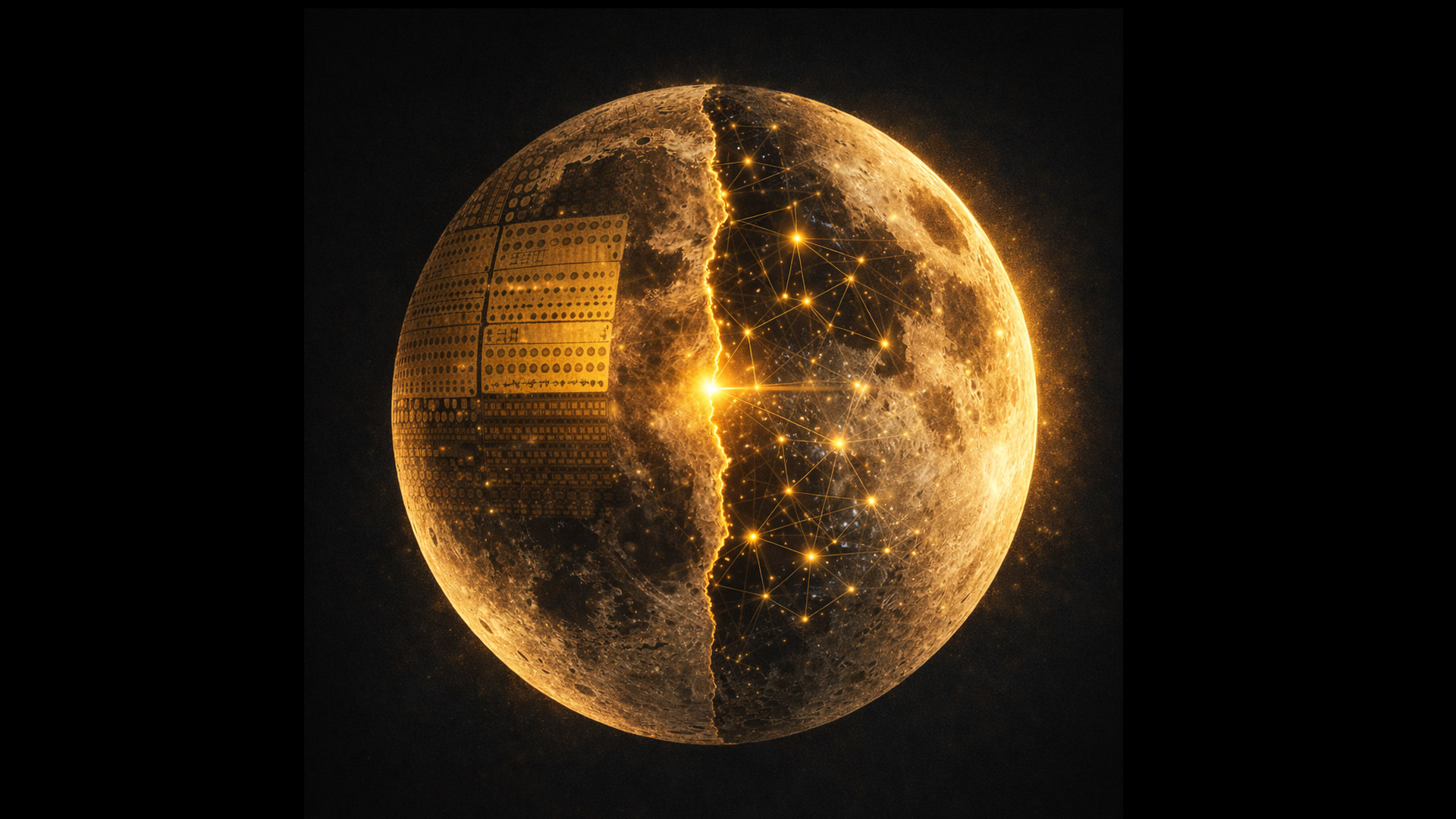
Astronauts sit on top of rocket fuel and trust. That has not changed. What has changed is how that trust is built, and how it is sustained when the system grows beyond the limits of human understanding.
In 1969, the world was smaller, not in ambition, but in comprehension. At MIT, Margaret Hamilton and her team worked within boundaries that were brutally clear, where every decision could still be traced, reasoned about, and held within the limits of a single mind. The machines were unforgiving, memory was scarce, and code was not something you refined over time but something you committed to with finality.
It was woven into rope memory by hand, each instruction physically embedded into the machine itself. A wire through a ferrite core meant one, around it meant zero, and once woven, it could not be changed. There was no iteration in the modern sense, no patches waiting, no second chances. There was only the quiet demand for correctness, or the certainty of failure.
So they learned to think differently. They replaced iteration with anticipation, feedback with foresight, and execution with mental simulation. They ran the system in their heads again and again, tracing every path until nothing remained that could surprise them.
When Apollo 13 passed behind the Moon, there was silence, but it was not empty. It was filled with something rare, a system fully understood. Reliability, in that moment, was not a property of the machine, but of the people who built it.
Half a century later, we return to the same arc. Artemis II leaves Earth, curves around the Moon, and disappears behind the same horizon, following the same elegant physics. Yet everything surrounding that motion has changed.
What once fit inside a room now stretches across systems that cannot be held in a single mind. Where Apollo could be understood completely, Artemis exists as an ecosystem, composed of flight systems, ground systems, simulations, digital twins, and layers of intelligence that operate together but are never fully seen as one.
The engineers no longer ask whether the system is understood. They know it is not. Instead, they ask whether it will remain aligned with its intent under conditions that cannot be fully predicted.
The friction has not disappeared. It has moved. It no longer lives in the machine, but in the act of understanding itself. In knowing that no single mind can trace every path, and in building systems that must still be trusted anyway.
The blackout still comes. Forty minutes behind the Moon, where nothing returns. In Apollo, that silence tested precision. In Artemis, it tests coherence. Not whether each part works, but whether the whole remains true.
And then, the only answer that matters arrives. They come back. Not by chance. Not by hope. But by design. That is the measure of engineering. Not whether we understand everything we build, but whether what we build remains true when understanding is no longer enough.
Like this article? Join the update list.